Insights
/
The History of Silk in Beauty: Why This Timeless Fabric Still Matters Today
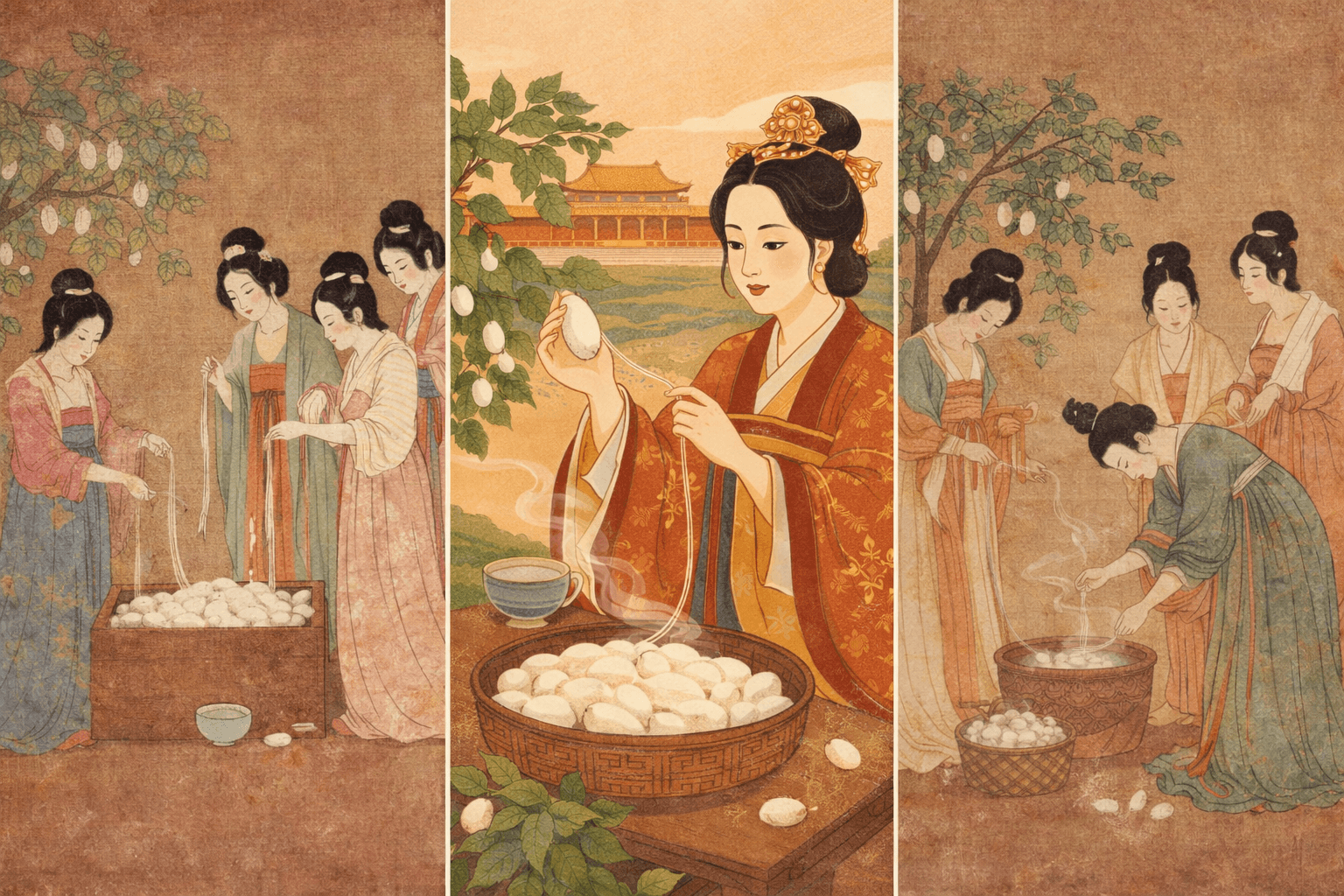
Long before "silk pillowcase" became a beauty buzzword, silk was already changing the way people cared for their hair and skin. Its role in beauty isn't a modern marketing invention, it's a practice that stretches back thousands of years, across continents and cultures. Understanding where silk actually comes from makes it easier to see why it's still worth choosing today, and why so many synthetic alternatives never quite live up to it.
Where It All Began: Ancient China
Silk's story starts in China, more than 4,000 years ago. According to legend, Empress Leizu discovered silk almost by accident, when a cocoon fell into her tea and began to unravel into a single, shimmering thread. Whether or not the story happened exactly that way, it marks the beginning of sericulture, the cultivation of silkworms specifically for silk production, and the start of one of the most closely guarded secrets in ancient history.
For centuries, silk was reserved almost exclusively for emperors, their families, and the nobility surrounding them. Wearing it, sleeping on it, and using it in daily rituals was a mark of status few could access. Women in the imperial court used silk cloths and pillow coverings not only as a display of wealth, but because its smooth surface genuinely helped preserve delicate hairstyles and skin, an early, practical form of beauty care long before the term existed.
A Secret Worth Protecting
China guarded the production of silk so tightly that revealing it to outsiders was punishable by death. That secrecy didn't last forever. By around the 5th century, silkworm cultivation had spread beyond China's borders, eventually traveling west along what became known as the Silk Road. As trade routes expanded, silk moved through Persia, into the Islamic empires, and eventually across Europe, carrying its association with wealth, refinement, and status wherever it went.
Silk in Beauty Rituals Beyond China
China wasn't the only culture to recognize silk's value beyond fashion. In ancient Japan, silk was woven into hair wraps and kimono fabric, prized for its softness and breathability. Women used it to support both hair health and skin hydration, understanding, long before modern skincare science existed, that the fabric touching your skin and hair for hours at a time actually matters.
Across different regions and eras, one theme repeats: silk wasn't just decorative. Its smooth, low-friction surface reduced the damage caused by rougher fabrics, protecting hairstyles, minimizing breakage, and helping skin stay hydrated overnight. What we now market as a "beauty hack" was, for a long time, simply how anyone with access to silk chose to sleep.
Not All Silk Is the Same
Part of silk's staying power comes from the fact that it isn't a single, uniform material. A few of the most common types include:
Mulberry silk — the most widely used and consistent silk, made from silkworms fed exclusively on mulberry leaves. Its smooth, even fibers make it ideal for pillowcases, bonnets, and anything that touches hair or skin directly.
Tussah silk — a wild silk with a slightly coarser texture, often used in scarves and decorative pieces. Durable, but less refined than mulberry.
Charmeuse silk — lightweight and glossy, commonly used in sleepwear and bedding for its soft drape.
Habutai silk — light and breathable, often used in wraps and accessories worn close to the skin.
Knowing the difference matters, because "silk" on a label doesn't automatically mean the same quality or performance. The type, and the momme weight behind it, determines how well a product will actually hold up to its promises.
Why Silk Still Matters Today
Modern life has given silk a new context, less about imperial status, more about intentional self-care. Silk pillowcases, bonnets, and scrunchies have become staples for people who want to protect their hair and skin overnight rather than undo their efforts every time they sleep. It's worth noting honestly: much of what we know about silk's beauty benefits comes from centuries of consistent, lived experience and the basic material science of how a smooth, low-friction, moisture-retentive fiber behaves, rather than a large body of clinical studies. That doesn't make the benefits less real, it just means silk earned its reputation the old-fashioned way: by working, repeatedly, for the people who used it.
That's really the throughline connecting an empress in ancient China to anyone reaching for a silk pillowcase tonight. The fabric hasn't changed. The reasons people choose it haven't either.
Final Thought
The history of silk in beauty is a reminder that some things don't need reinventing, they just need protecting from imitation. Thousands of years after its accidental discovery, genuine mulberry silk still does what it always did: reduce friction, retain moisture, and quietly support healthier hair and skin, one night at a time. Choosing real silk today isn't just a self-care upgrade, it's a small continuation of a very old, very well-earned tradition.
share


