Insights
/
The History of Bonnets: Origins & Meaning
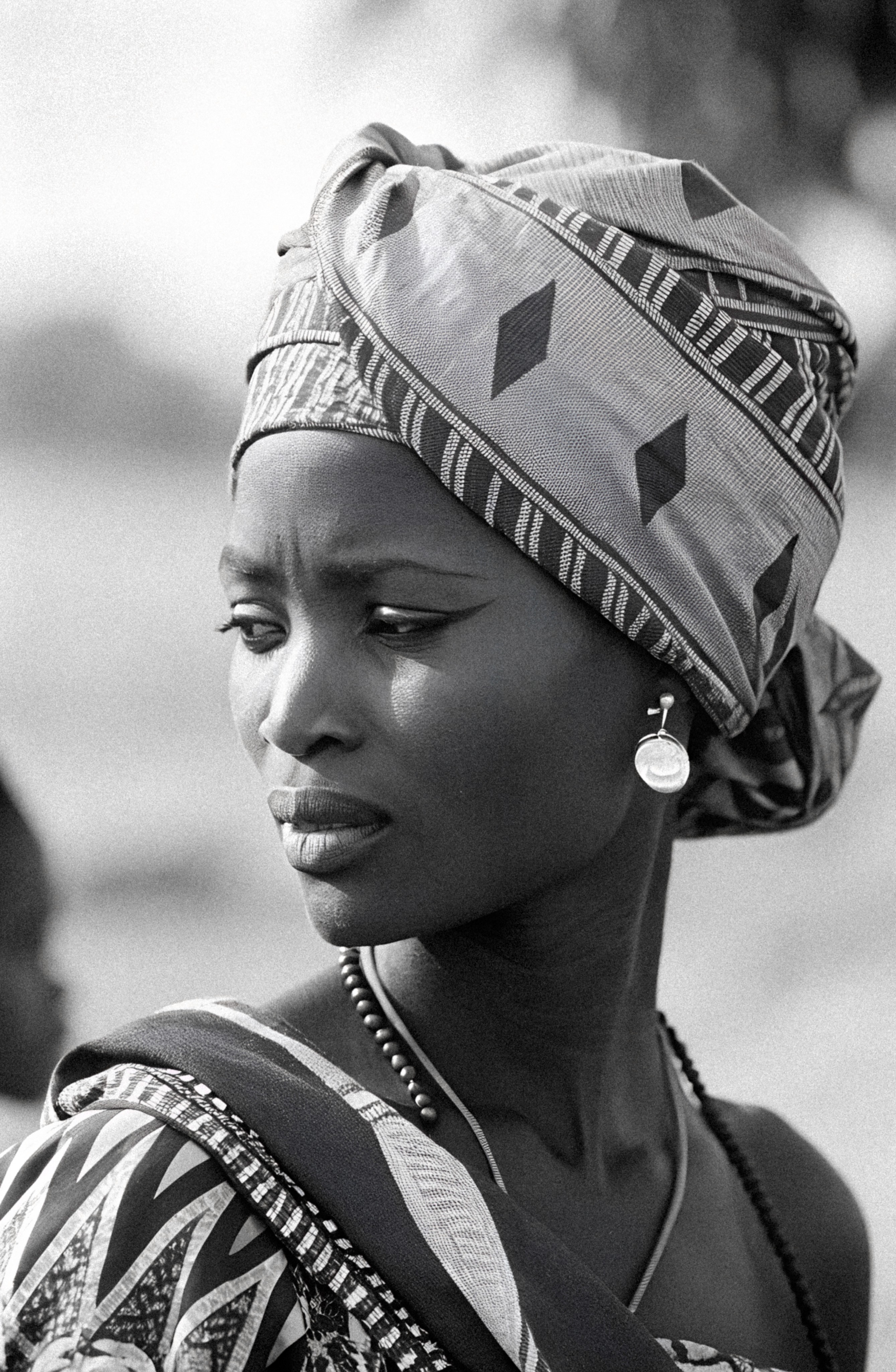
A bonnet looks, on the surface, like a simple thing: a piece of fabric that covers your hair while you sleep. But few objects in beauty carry as much layered history, spanning continents, centuries, and a story of oppression turned deliberately, defiantly, into style. Understanding where the bonnet actually comes from changes how you see it, not as a small nighttime routine step, but as something with real weight behind it.
Before the Bonnet: African Headwraps
Long before the word "bonnet" existed, headwraps were already central to daily life across West and Central Africa. Known by many names depending on the region, dukus, geles, and others, these wraps did far more than protect hair. They communicated status, marital state, ethnicity, and sometimes even emotion, a form of visual language worn on the head. Style, fabric, and the way a wrap was tied could tell you something meaningful about the woman wearing it before she said a word.
This tradition of intentional, expressive head covering is the true root of what would eventually become the bonnet, not a European invention adapted later, but a practice with its own deep history that predates it by centuries.
A Parallel European History
Separately, bonnets also existed in European fashion, worn from the Renaissance through the Victorian era as both practical nightwear and a marker of social standing. Wealthy women wore elaborate bonnets made from silk and lace as a display of status, while simpler versions served the ordinary, practical purpose of keeping hair contained through cold nights in draughty bedchambers. These two histories, African headwraps and European bonnets, developed independently, but they would collide, and collide painfully, on American soil.
The Tignon Laws: When a Headwrap Became a Weapon
This tradition of African headwrapping traveled with the transatlantic slave trade, and one of its most striking, best-documented chapters unfolded in Spanish colonial Louisiana. In 1786, the Spanish colonial governor, Esteban Rodríguez Miró, passed what became known as the Tignon Laws. The law required Black women in New Orleans, enslaved and free alike, to cover their hair in public with a tignon, a type of headwrap. The intent was explicitly about control: free Black women in the city had built visible wealth, education, and influence, and their elaborate, styled hair had become part of that visibility. The law was designed to visually flatten the distinction between free and enslaved Black women, marking them as a single, lesser class regardless of their actual legal status.
What happened next is one of the more remarkable acts of quiet resistance in American fashion history. Rather than complying in the spirit the law intended, women turned the mandated tignon into an opportunity. They chose vivid fabrics, added jewels, ribbons, and intricate folds, and wore the very thing meant to diminish them as something closer to a crown. The law technically stayed in effect for years, but its actual purpose failed almost immediately. What was meant to suppress became, instead, a documented act of style and self-possession that historians still point to today.
From Survival to Nightly Ritual
The bonnet's more recent history is inseparable from the pressure Black women faced around hair more broadly, a pattern that played out across the diaspora, in the United States, the Caribbean, and the United Kingdom alike, not in one country alone. Straight hair was widely enforced as the standard of beauty for much of the twentieth century, pushing many women toward hot combs and chemical straighteners, tools that, used repeatedly, caused real damage. Protecting whatever style had been achieved, often at real physical cost, became essential. By the 1950s, bonnets made from cotton, silk, or satin had become a standard part of that protection, worn overnight to guard against friction and moisture loss, often handmade and passed down within families rather than bought.
The rise of natural hair pride in the 1960s and 70s, most visibly tied to the American Civil Rights movement but echoed in Black communities well beyond it, shifted the bonnet's meaning again. As the afro and other natural styles became symbols of pride rather than something to correct, the bonnet's role expanded with them, no longer just protecting straightened styles, but preserving natural texture, twist-outs, and curls that women were now choosing to wear proudly in public. The bonnet moved from a tool of damage control to a tool of preservation for a look people were actively choosing to celebrate.
The Modern Bonnet
Today's bonnet exists somewhere between all of these histories at once: a practical nighttime tool, a piece of cultural inheritance, and increasingly, a visible fashion object in its own right, worn outside the bedroom without apology. The shift from cotton to genuine silk reflects a real material upgrade, a smoother fiber that actually protects hair overnight rather than just covering it, and the silk bonnet in particular has become something of a modern staple in its own right, recognizable well beyond the bedroom. The choice to wear one publicly, confidently, carries the same undercurrent the tignon did centuries ago: a refusal to shrink something meaningful just because it makes others uncomfortable.
Final Thought
A bonnet is never really just fabric. It carries African tradition, the specific, documented resistance of Black women in colonial Louisiana, and generations of protective care passed down as both necessity and inheritance. Making one today, or choosing to wear one, means stepping into that history, whether or not it's spoken aloud. It's worth remembering, especially on an ordinary night, wrapping your hair before bed.
share